| |
| |
To
ensure you receive your life’s a feast newsletter, please add [email protected] to your address book now.
|
|
Feasting
September 2013
Dear,
Greetings from life's a feast and welcome to the September edition of Feasting. Spring has sprung and its arrival brings a wonderful assortment of new season fruit and vegetables: asparagus and strawberries are two of my favourites at this time of the year! Our regular "What's in Season?" column in this newsletter will keep you up to date with which fruit and vegetables are best each month.
As much as most people welcome the warmer weather, Spring is also a time of year that some people dread, as they are paying the price of eating too much comfort food over winter. For those of you that have a few kilo's to shed, you'll definitely appreciate this month's feature article "Low Fat Food Ideas for Spring".
We have just finalised the first four months of our 2014 cooking class schedule, and have added some exciting new classes! Based on feedback from our clients, new cooking classes include "Advanced Pasta Making", "Duck Demystified", "Italian Long Lunch", "Flavours of Noosa – from Market to Plate" and "On the Table In Twenty". You can view class descriptions and sample menus on our website and our new timetable is at the end of this newsletter – we hope to see you at our cooking school in beautiful Noosa soon!
And lastly, don't forget to tune into The Great South East to see our television debut! This popular TV show which showcases tourist attractions in South East Queensland will feature life's a feast on their Sunday 22nd September episode which airs at 5:30pm on Channel 7 in Queensland. The episode will be repeated and shown in the rest of Australia the following Saturday 28th September at Channel 7Two. The time varies depending on your location but it is around midday – best to check your local TV guide.
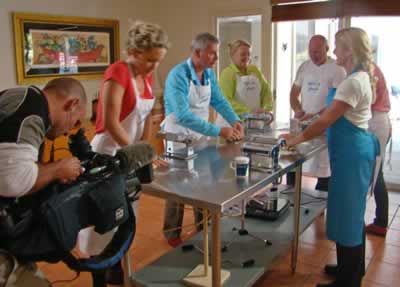
Lights, camera, action at life's a feast!
|
| |
This month’s newsletter articles include:
• Low Fat Food Ideas for Spring
• Recipe: Primavera Salad
• What’s in Season?
• Fruit of the Month: Papaya
• Monthly Food Tip
Bon appétit!
Gail |
 |
| |
Low Fat Food Ideas for Spring |
| |
The start of spring is a time when many people embark on diets to lose weight and get into shape. Cooking can be a challenge at this time of the year, but it is perfectly possible to prepare and serve your family and guests delicious tempting food without the fat and the extra calories, without them even knowing!
We are very fortunate in Australia with our incredible selection of fresh fruit and vegetables, endless cuts of meat and fantastic seafood. Serving quality fresh food does not require the flavours to be masked by rich sauces or fat-inducing cooking methods like deep-frying – the beautiful flavours speak for themselves.
We offer the following low-fat suggestions to incorporate in your meal planning:
If you're entertaining, for pre-dinner nibbles, choose a low-fat dip such as Tzatsiki (Greek yoghurt dip), served with vegetable crudités. A great snack idea is to serve Edamame (young soy beans) – buy them from the frozen food section of Asian grocers, boil in salted water and serve with sea salt.
An excellent lunch choice or an entrée if you're having guests is a salad topped with either poached chicken breast or seafood and dressed with a low-fat dressing (try making one yourself with citrus juice and fresh herbs). Pasta served with a tomato-based sauce or a non-creamy soup such as Minestrone or Gazpacho are also great choices.
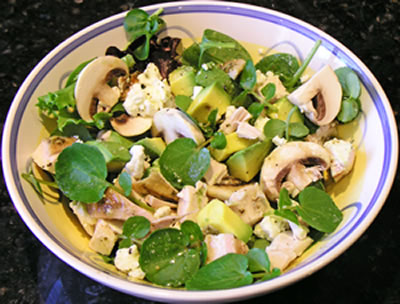
A poached chicken salad makes a satisfying lunch or entree
For a main meal, choose fish or lean cuts of meat such as skinless chicken breast or lean pork. Be sure to remove any visible fat from the meat and serve with homemade salsas, such as a mango salsa or low-fat sauces rather than creamy or buttery sauces. Incorporate plenty of vegetables and legumes either in the dish or on the side.
Diet-conscious does not have to mean dessert-denied! Serve a fruit salad with yoghurt flavoured with a little honey and spice. Alternatively prepare a low fat dessert like my crust-free Strawberry Ricotta Cheesecake and you or your family or guests won't feel the least bit deprived.
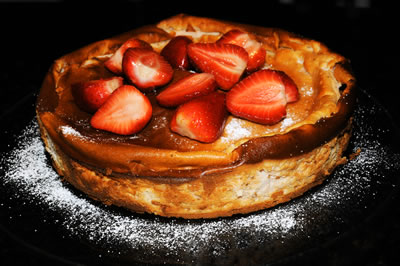
This Strawberry Ricotta Cheesecake is a delicious low-fat dessert
Here are a few general tips to help you cut the fat out of your diet:
• Cooking methods make a big difference to fat and calorie content. Steaming, poaching, stir-frying and barbequing are all low fat cooking methods and retain the flavour and nutrients of the food. Avoid cooking methods such as deep-frying and shallow-frying, which add unwanted, unnecessary fat.
• Use non-stick frying pans as very little fat is required.
• Use a pastry brush to oil a pan.
• Choose leaner cuts of meat and remove visible fat.
• When cooking casseroles and braises, prepare the day before and leave in the refrigerator overnight – the layer of fat on the top will then be easy to remove.
• Use low fat food substitutions, such as yoghurt for mayonnaise or sorbet for ice cream.
• Choose foods packed in brine or vinegar rather than oil, such as tuna and olives.
• Flavour your dishes with fresh herbs rather than pre-bought sauces or dressings.
• Avoid processed foods which often contain hidden fats.
• Cook foods in liquids such as fruit juice, stock, wine or water rather than oil.
• When shopping, read the labels to determine and compare the fat content in foods.
Here's to healthy eating and vibrant good health!
|
| |
|
| |
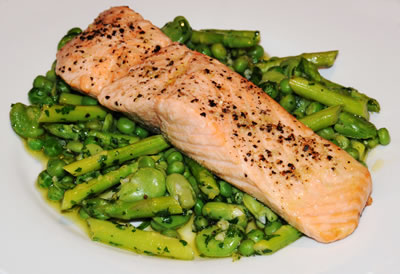
Primavera in Italian means "spring style" and this salad showcases the best of spring produce. This is lovely as an accompaniment to fish or chicken, and makes a delicious entree served with smoked salmon or trout.
Ingredients (serves 4):
½ cup extra virgin olive oil
¼ cup finely chopped flat-leaf parsley leaves
Finely grated rind of 1 lemon
1 tablespoon fresh lemon juice
2 cloves garlic, crushed
Freshly ground black pepper
½ teaspoon sea salt
500g podded fresh or frozen broad beans
2 bunches of asparagus
250g fresh or frozen baby peas
Method:
1. Combine the olive oil, chopped parsley, lemon rind, lemon juice, garlic, salt and pepper in a small bowl.
2. Bring a saucepan of salted water to the boil, add the broad beans and boil for 3 minutes. Remove the broad beans with a slotted spoon, drain and refresh with cold running water. Peel and discard the outer skins and place the broad beans into a bowl.
3. Snap the woody ends of each asparagus spear and trim the ends with a knife. Cut into 4cm pieces on the diagonal. Add to the boiling water together with the peas and cook for 2 minutes. Drain and refresh briefly with cold running water. Place in the bowl containing the broad beans. Pour over the dressing, toss, cover and refrigerate until ready to serve.
4. The salad can be served cold, at room temperature or warmed slightly in a microwave oven.
|
| |
|
| |
Spring's arrival brings a new selection of fruits and vegetables. Incorporate the following in your cooking to ensure you get the best quality, taste and value: |
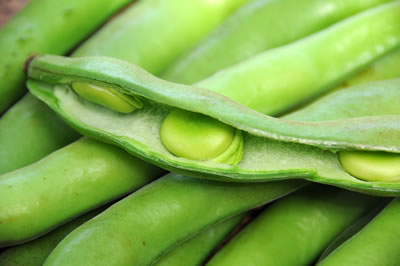 Broadbeans are currently in season
 |
Fruit
Apples
Cumquats
Grapefruit
Lemons
Mandarins
Oranges
Papaya & Pawpaw
Pineapple
Rockmelons
Strawberries
Tangelo |
Vegetables
Artichokes
Asian Greens
Asparagus
Avocados
Beans (broad & green)
Beetroot
Broccoli
Cabbage
Carrots
Cauliflower
Garlic
Ginger
Leeks
Lettuce
Onions
Peas
Pumpkin
Spinach and Silverbeet |
|
| |
Fruit
of the Month: Papaya |
| |
|
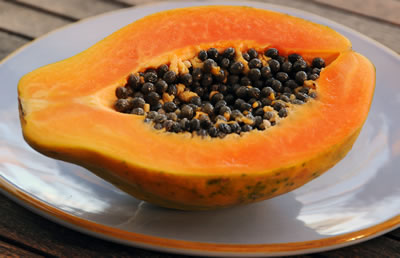
Papaya is an exotic tropical fruit, originally from Central America. It is grown in warmer climates, and in Australia papaya is predominately grown in Northern Queensland areas as well as Western Australia and the Northern Territory. Papaya is harvested all year round with production peaks during spring and autumn.
There is some confusion between a papaya and a pawpaw, however a pawpaw has a distinct yellow flesh and is a larger fruit, whilst a papaya has orange to red flesh and is a smaller oval or pear-shaped fruit. Although there is a subtle difference in taste, the two can be interchangeable.
Nutritionally, papaya contains a wide variety of vitamins and minerals, including vitamin C, vitamin A, calcium, iron and a wealth of protective antioxidant carotenoids. Papaya is also a valuable source of dietary fibre, is low in sodium and kilojoules and is fat free.
Papaya contains a natural enzyme that helps with the breakdown of proteins and is excellent as a meat tenderiser (similar to pineapple).
When purchasing, choose fruit that is free from obvious bruises. Light, superficial blemishes may be disregarded as they don't affect the internal eating quality of the fruit.
Papaya can be ripened at room temperature and are ready to eat when the skin is yellow and slightly soft to the touch. They can be stored in the fridge for a few days once ripe. Once cut, cover with plastic wrap to keep fresh.
The easiest way to prepare a papaya is to cut the fruit in half, scoop out the black seeds and cut into wedges. (Interesting fact: the seeds can be dried and ground in a mortar and pestle and used as you would pepper.) Then remove the skin from each piece by gliding a knife under the skin and cut into chunks if desired.
Here are five ways to use papaya:
1. Serve half a papaya with the seeds removed with the juice of half a lime.
2. Make a salsa with diced papaya, tomato, red onion, chopped coriander, finely chopped chilli and fresh lime juice. Lovely with fish!
3. Add shredded unripe green papaya to an Asian salad.
4. Add papaya to a banana smoothie.
5. Use a melon baller to make papaya balls and add to a tropical fruit salad.
|
| |
|
| |
When cooking pasta, add a little of the pasta cooking to the sauce just before serving. This helps loosen the sauce and the starch in the water adds body.
|
| |
About life’s a feast |
| |
life's a feast is a boutique cooking school located in beautiful surroundings at Noosa on Queensland's Sunshine Coast. Our premium, hands-on Cooking Classes are designed to increase your culinary skills and food knowledge, and ignite your passion for food, cooking and entertaining.
If you enjoyed this newsletter, why not visit our blog where you will find more articles, recipes, tips and ideas on food, cooking and all things culinary. Or if you're interested in the food scene in Noosa, check out our other blog, Noosa Foodie.
|
| |
Upcoming
Cooking Classes |
| |
A life's a feast cooking class is more than just a cooking lesson! In addition to preparing a selection of sumptuous dishes, you will increase your kitchen skills and culinary knowledge and enjoy a full sit-down meal with wine tastings in a relaxed and fun environment at beautiful Noosa on Queensland's Sunshine Coast.
Our upcoming scheduled (public) cooking classes are as follows:
|
| |
|
|
| September
2013 |
|
Class |
| Saturday
21 September, 1pm - 5pm |
|
Seafood
Barbeque |
| Friday 27 September, 10am - 2pm |
|
Pasta Making and
Italian Sauces |
| Saturday
28 September, 1pm - 5pm |
|
Easy
Asian Dinner Party |
| |
|
|
| October 2013 |
|
Class |
| Saturday 5 October, 10am - 2pm |
|
Gourmet Aussie Barbeque |
| Friday 11 October, 10am - 2pm |
|
Indonesian Banquet |
| Saturday 12 October, 1pm - 5pm |
|
Pasta Making and
Italian Sauces |
| Friday 18 October, 10am - 2pm |
|
Easy Asian Dinner
Party |
| Friday 25 October, 10am - 2pm |
|
Pasta Making and
Italian Sauces |
| Saturday 26 October, 1pm - 5pm |
|
Celebrate the Seasons: Spring |
| |
|
|
| November 2013 |
|
Class |
| Saturday 2 November, 10am - 2pm |
|
Cocktail Food |
| Saturday 9 November, 1pm - 5pm |
|
Seafood Barbeque |
| Friday 15 November, 10am - 2pm |
|
Pasta Making and
Italian Sauces |
| Saturday 23 November, 1pm - 5pm |
|
Gourmet Aussie Barbeque |
| Friday 29 November, 10am - 2pm |
|
A Modern Australian Christmas Feast |
| Saturday 30 November, 1pm - 5pm |
|
A Modern Australian Christmas Feast |
| |
|
|
| December 2013 |
|
Class |
| Friday 6 December, 10am - 2pm |
|
A Modrn Australian Christmas Feast |
| Saturday 7 December, 1pm - 5pm |
|
Seafood Barbeque |
| Saturday 14 December, 10am - 2pm |
|
Gourmet Aussie Barbeque |
| |
|
|
| January 2014 |
|
Class |
| Saturday 4 January, 1pm - 5pm |
|
Seafood Barbeque |
| Friday 10 January, 10am - 2pm |
|
Pasta Making and
Italian Sauces |
| Sunday 12 January, 9am - 2pm |
|
Flavours of Noosa: From Market to Plate |
| Friday 17 January, 10am - 2pm |
|
Easy Asian Dinner
Party |
| Saturday 18 January, 12pm - 5pm |
|
Italian Long Lunch |
| Saturday 25 January, 10am - 2pm |
|
Gourmet Aussie Barbeque |
| |
|
|
| February 2014 |
|
Class |
| Saturday 1 February, 12pm - 5pm |
|
Duck Demystified |
| Friday 7 February, 11am - 2pm |
|
On The Table in Twenty |
| Saturday 8 February, 1pm - 5pm |
|
Pasta Making and
Italian Sauces |
| Saturday 15 February, 1pm - 5pm |
|
Advanced Pasta Making |
| Saturday 22 February, 1pm - 5pm |
|
Seafood Barbeque |
| Friday 28 February, 10am - 2pm |
|
Gluten Free Entertaining |
| |
|
|
| March 2014 |
|
Class |
| Saturday 1 March, 1pm - 5pm |
|
Gourmet Aussie Barbeque |
| Saturday 8 March, 1pm - 5pm |
|
Pasta Making and
Italian Sauces |
| Friday 14 March, 12pm - 5pm |
|
Italian Long Lunch |
| Sunday 16 March, 9am - 2pm |
|
Flavours of Noosa: From Market to Plate |
| Saturday 22 March, 10am - 2pm |
|
Indonesian Banquet |
| Friday 28 March, 10am - 2pm |
|
Easy Asian Dinner
Party |
| |
|
|
| April 2014 |
|
Class |
| Friday 4 April, 10am - 2pm |
|
Pasta Making and
Italian Sauces |
| Saturday 5 April, 1pm - 5pm |
|
Seafood Barbeque |
| Friday 11 April, 10am - 2pm |
|
Advanced Pasta Making |
| Sunday 13 April, 9am - 2pm |
|
Flavours of Noosa: From Market to Plate |
| Saturday 19 April, 10am - 2pm |
|
Gourmet Aussie Barbeque |
| Monday 21 April, 12pm - 5pm |
|
Duck Demystified |
| |
|
|
life’s
a feast also specialises in private, customised cooking classes
- ideal for birthday and anniversary celebrations, Hen's and Buck’s
parties, social get-togethers and team building. We also offer
individual tuition if required. For class details or to make a booking,
please visit our website or call us on 0438 469 692.

|
| |
|
Stay
connected with life’s a feast: |
| |

|
| |
| |
If you have any questions, comments or suggestions
for future newsletters, please email us at [email protected].
Your feedback helps us to produce a newsletter that is helpful and informative
for you!
|
Send
to a friend:
|
To
update your preferences visit:
|
click here to unsubscribe |
| |







